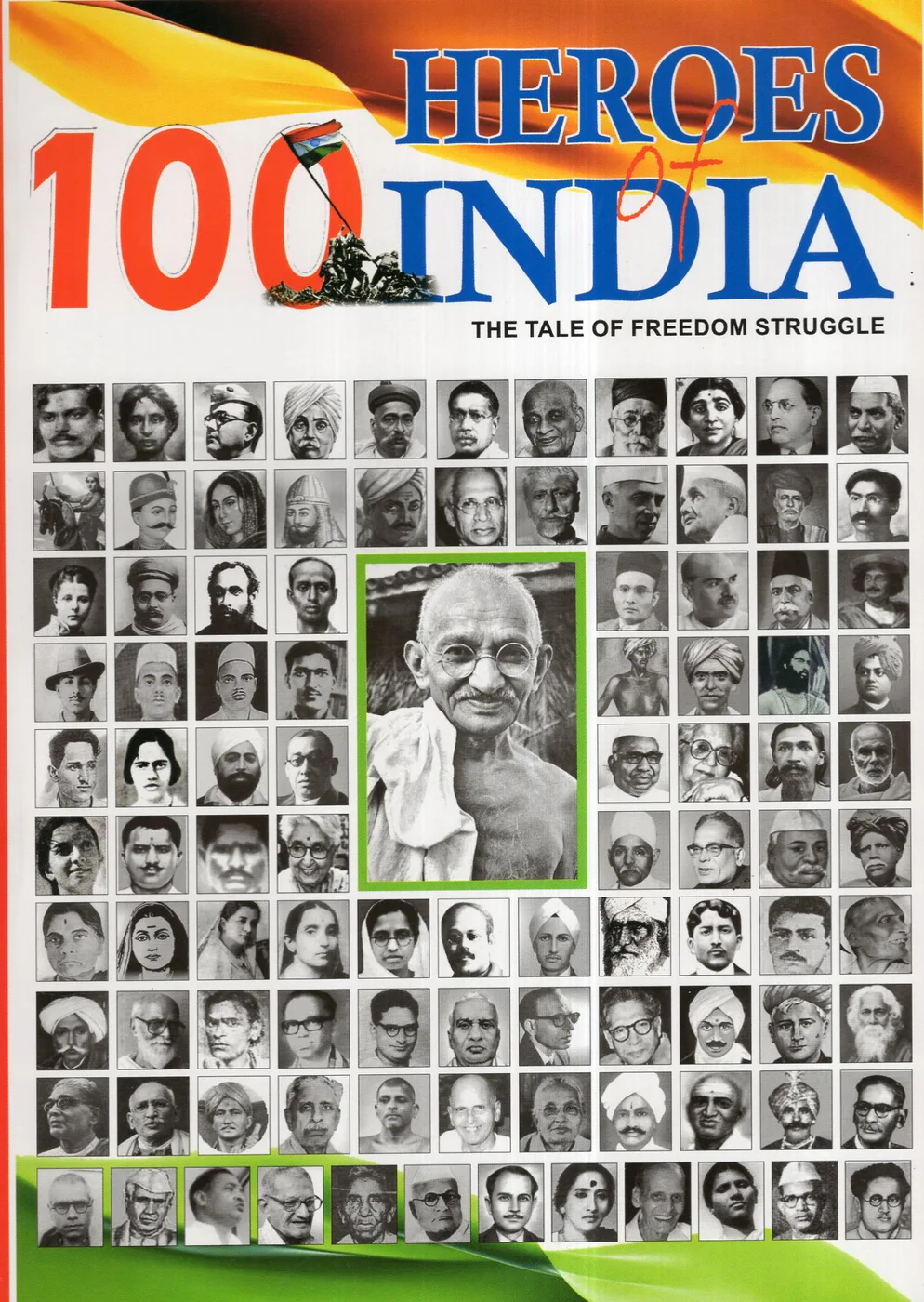
100 HEROES OF INDIA - THE TALE OF FREEDOM STRUGGLE
by FAIR MEDIA
₹300
In stock · 15 available
PublisherFAIR MEDIA
LanguageEnglish
India's First War of Independence served in awakening a wave of pride in even the most cold-hearted Indian. It is the one event in which monarch and commoner alike fought the Britishers. The stormy events of 1857 are the first unmistakable pan-Indian revolt against the Britishers. It was the first major revolt by anti-colonial forces. In fact, this revolt was preceded by a number of smaller ones like the Santhal Rebellion of 1855, the Kol Uprising of 1831, the Mutiny of Vellore soldiers in 1806 and many others. But the Revolt of 1857 surpassed all of these in sheer scope, area and above all, fervor. Most historians, British as well as Indian, described and dismissed the Uprising of 1857 as a 'Sepoy Mutiny' or at best 'The Indian Mutiny'. But, to the Indians, it was a planned and organized political and military Uprising aimed at destroying the British power in India. ANGER AGAINST THE WHITES There was widespread anger and opposition to the British rule which had bled India starting from their gaining the Diwani of Bengal after their victory at Plassey in 1757. (As early as 1693, annual expenditure in political 'gifts' to men in power reached nearly 90, 000 pounds. By 1767, the East India Company had to pay huge annual amounts into the national exchequer.) The Indian soldiers or sepoys were disgruntled at the discrimination practiced in the army, the proselytizing activities of the Christian missionaries and numerous other grievances. Another chief cause was the usurpation of Indian princely states through the infamous Doctrine of Lapse. Using this principle, Lord Dalhousie annexed a number of princely states like Satara, Nagpur, Jhansi and Sambalpur. However, some particular incidents like the unjust removal of Maharaja Pratap Singh of Satara,descendant of the Great Shivaji, the treating of the Queens of Nagpur with scant respect and the auction of the Nagpur crown jewels in Calcutta, were particularly heart burning. Besides, it was proclaimed that after the death of Bahadur Shah, the Mughal Emperor, his sons would have to shift from the Red Fort and would only be known as princes, as the title of 'Emperor' was to be abolished. The introduction of the cartridges greased with beef and pig fat was considered by many to be the proverbial last straw for the people of the country. In fact, this was the spark to the tinder. These have prompted great leaders like Nana Saheb Peshwa, Rani Lakshmi Bai of Jhansi, Tatya Tope, Maulvi Ahmadullah of Faridabad, Emperor Bahadur Shah and Kunwar Singh, the octogenarian king of Jagdishpur to take a plunge into the war.