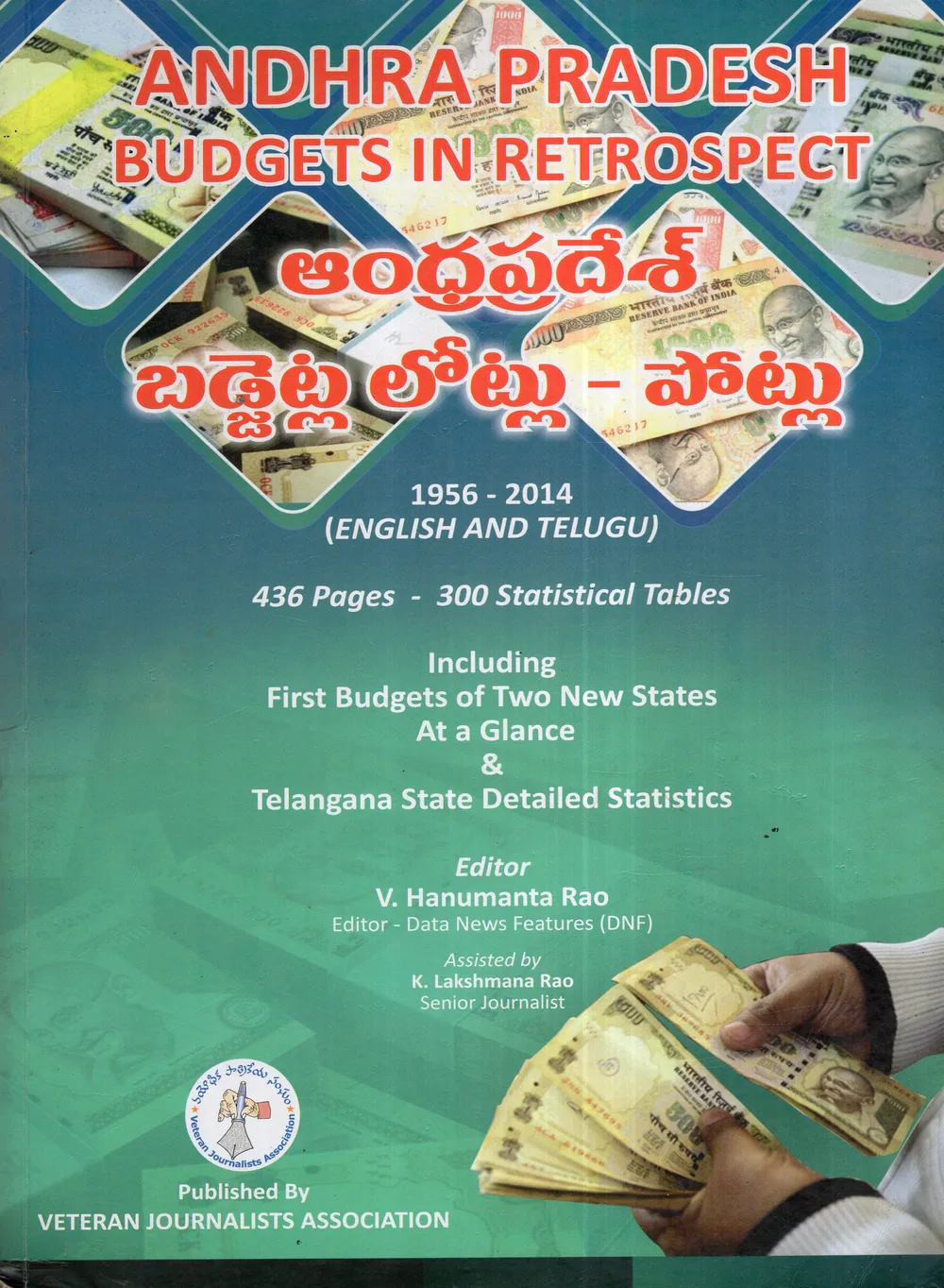
ANDHRA PRADESH BUDJETLA LOTLU POTTLU
by VETERAN JOURNALISTS ASSOCIATION
₹500
In stock · 3 available
PublisherVETERAN JOURNALISTS ASSOCIATION
LanguageTelugu
ANDHRA PRADESH BUDGETS IN RETROSPECT Editor's Overview The State's finances are in a pit as on date. The state is not able to undertake any activity without loans and more loans, secured from any source, local, central or international. We have reached a position when we need international support, mostly from the World Bank, even to plant a tree on a roadside! Political accusations and counter-accusations a part, why are we dragged into such a situation? will be too simplistic to answer saying that we are spending more than we earn. A bird's eyeview of the budget figures gives the impression that there was a revenue surplus in most of the years prior to early eighties, but it turned to deficit for most of the years after that, due to populist measures. Is it so? Firstly, the new State of Andhra Pradesh in 1956, had a low base to start with, thanks to the discrimination suffered by Andhra districts in the erstwhile Madras State and the total neglect of the development of the Telangana districts by the erstwhile ruler of the Nizam. For instance, Andhra districts got an allotment of just Rs.3 crores for power as against Rs.30 crores for the rest of the erstwhile Madras State. Similarly we would not have a Nagarjunasagar Project, if the Krishna - Pennar Project, conceived by the then Madras Government, became a reality. There were hardly 13718 registered vehicles in the whole of Andhra Region in 1951! A nascent State, with such a low base, cannot catapult self to the position of a developed State overnight. Secondly, as the statistical analysis has shown, the required attention was not paid by successive governments to mobilise non-tax resources. On the other hand, a tradition was set to depend overly on taxation measures only. Thirdly, with agriculturists' representatives being in power in a State predominantly agricultural, there was an emphasis on provisions to irrigation, power and agriculture, almost to the exclusion of allocations for social services. The poor, instead of being drawn into active productive process, contributing to building up the riches of the State, were marginalised. Looked at from the need and desirability to give priority for infrastructure development,government's priority may look alright, but what is questionable is the action of spreading the already thin resources still more thinly on too many irrigation projects, the full benefits of which could not be realised affecting the resource building capacity of the State.