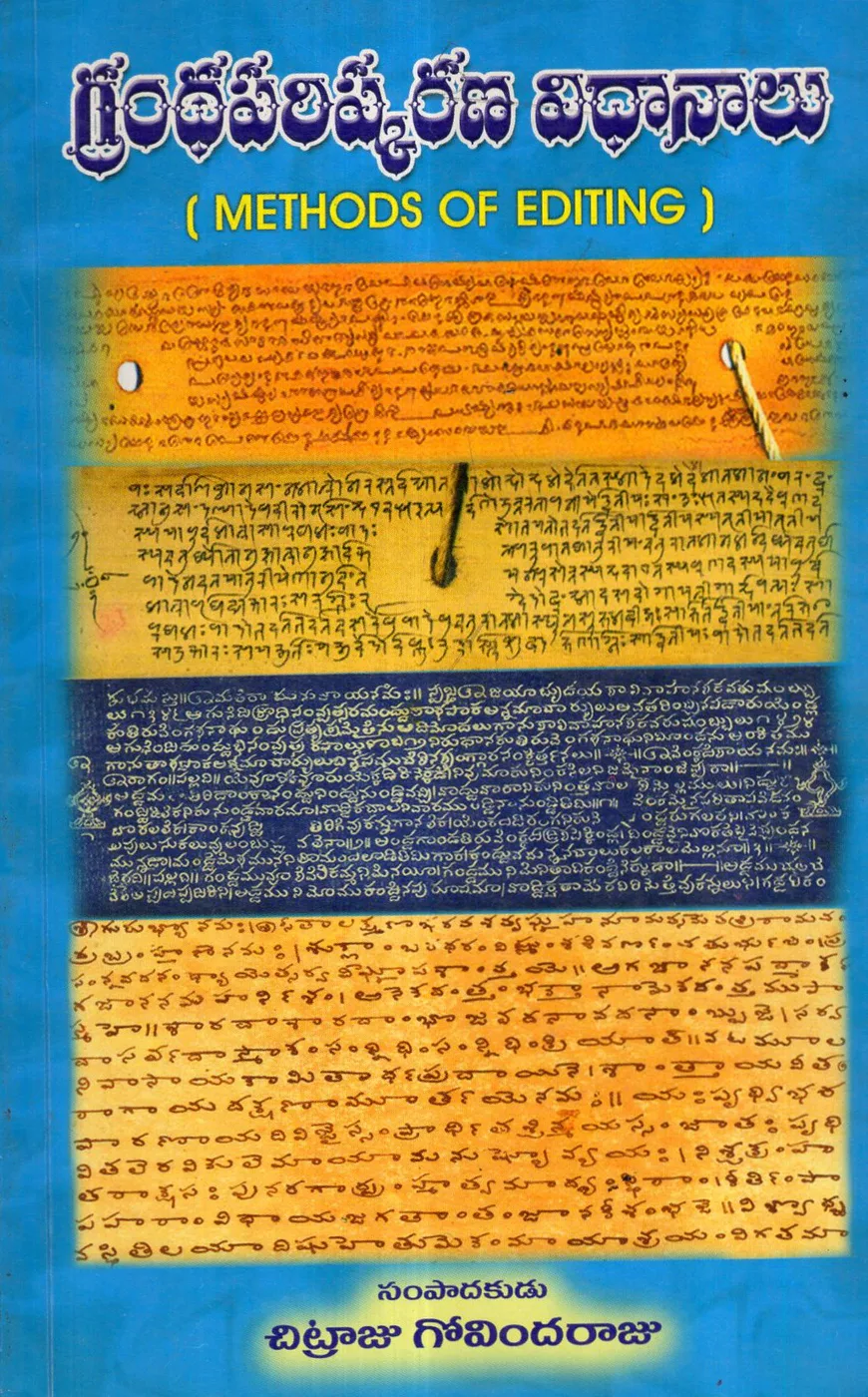
GRANDHAPARISHKARANA VIDHANALU
₹300
In stock · 3 available
PublisherCHITRAJU GOVINDARAJU
LanguageTelugu
FORWORD Editing of manuscripts especially palm leaves was started in the first half of the 19th Century A.D. Without proper editing, the manuscripts are unintelligible to read. They appear with the contemporary scripts and languages. When written tradition started in India from 6th Century B.C., Bhurjapatras in North India and palm leaves in south India were used for writing religious and literary matter. The first literary work in Telugu i.e., Mahabharata of Nannaya (11th Century A.D.) also was written on palm leaves with stylus in Telugu-Kannada script. This script was common to both Telugu and Kannada regions for writing purposes up to 14th Century A.D. Telugu-Kannada script was used both for writing manuscripts and incising inscriptions on stones and copper plates. Many lithic and copper plate records were discovered in many places of our country with archaic Telugu in southern Brahmi characters. Later on south Indian scripts evolutionised from southern Brahmi. Editing inscriptions: Inscriptions in different languages and scripts from early period were the main sources for knowing political, economical, religious, cultural, social, anthropological and literal information of our country through centuries. Inscriptions can yield such information when they are properly edited and studied. Editing an inscription either lithic or copper plate is not an easy task. One must have paleographic, orthographic, linguistic, historical, dynastical knowledge to decipher an inscription. When it is deciphered on these lines, it unfolds many details. Scholars who involve themselves in this work feel proud and happy when they can study the inscriptions thoroughly. Deciphering Indian inscriptions was initiated by the European scholars from the second half of the