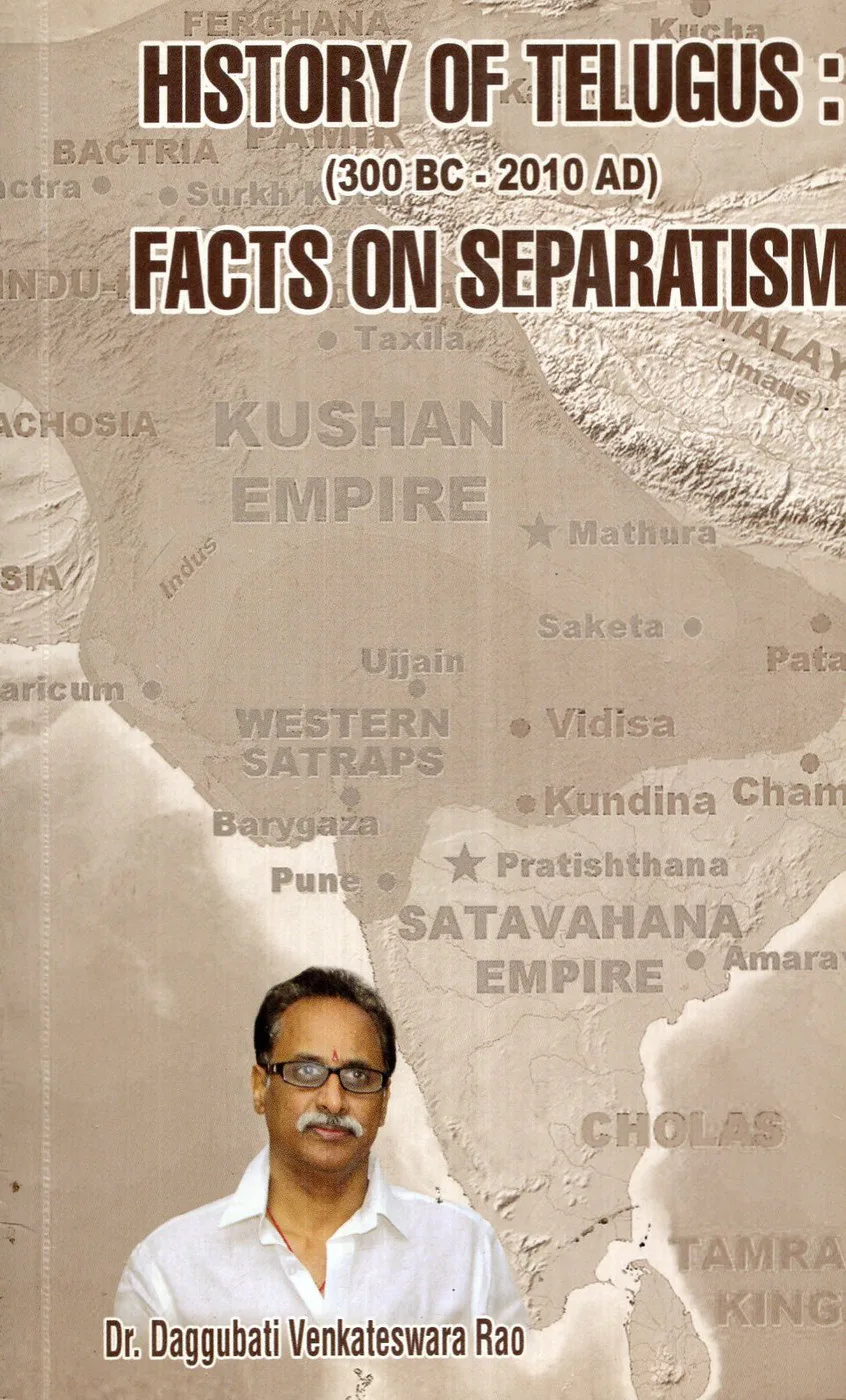
HISTORY OF TELUGUS 300 BC 2010 AD FACTS ON SEPARATISM
by DR.DAGGUBATI VENKATESWARA RAO
₹150
In stock · 7 available
PublisherNIVEDITA PUBLICATIONS
LanguageEnglish
The History of Telugus (300 BC 2010 AD) Presently Andhra Pradesh is identified with two important regions known as Seemandhra and Telangana. Though both the areas have Telugu-speaking people, these areas were once ruled separately for some time and as an integrated one for some time. According to the available sources, the history of Andhras is known to us only since third century B.C which means it roughly spreads to 2300 years. These areas were ruled by Satavahanas, Ikshvaks, Pallavas, Salankayanas, Vishnukundins, Ganga dynasty, Chalukyas, Cholas, Gajapatis, Kakatiyas, Musunuri Nayakas, Recharla Padmanayakas, Reddy Kings, Bahamani Sultans, Golconda Nawabs, Vijayanagara Kings, Nizam Nawabs and the British till India got freedom in 1947. Later, Telugu Chief Ministers have started ruling. Regarding the origin of Andhras, there are conflicting arguments. Some opine that Andhras are Aryans, who descended to the Deccan, acquired their culture and mingled with the people. Others feel that Andhras are not Aryans but Dravidians who have been living here since ancient times. The word 'Tenugu' means 'turn towards South or travel towards South. 'Ten' means 'South' in Tamil and Kannada languages. As can be seen from the history, Telugu, Tamil and Kannada people were Dravidians and these three languages have originated from a single Dravidian race only. Tenugu people's ancient dwelling place was Telangana. Tenugu was gradually transformed into 'Telugu. It is also believed that from this source, the names of Telangana, Telanganulu, Tevirigiri, Trilingadesham etc. were formed. In Telangana, particularly in the areas of Dornakal, Begumpet, Moula Ali, Madhira and Chintakani ancient tombs were found in excavations. These are called Kairons or Demon temples (Rakshasa gullu). They used to keep the corpse in an underground stone house with some grain, coins, tools and jewellery: used by the dead at the time of cremation. People believe that they resemble the Harappa and Mohenjo-Daro traditions.